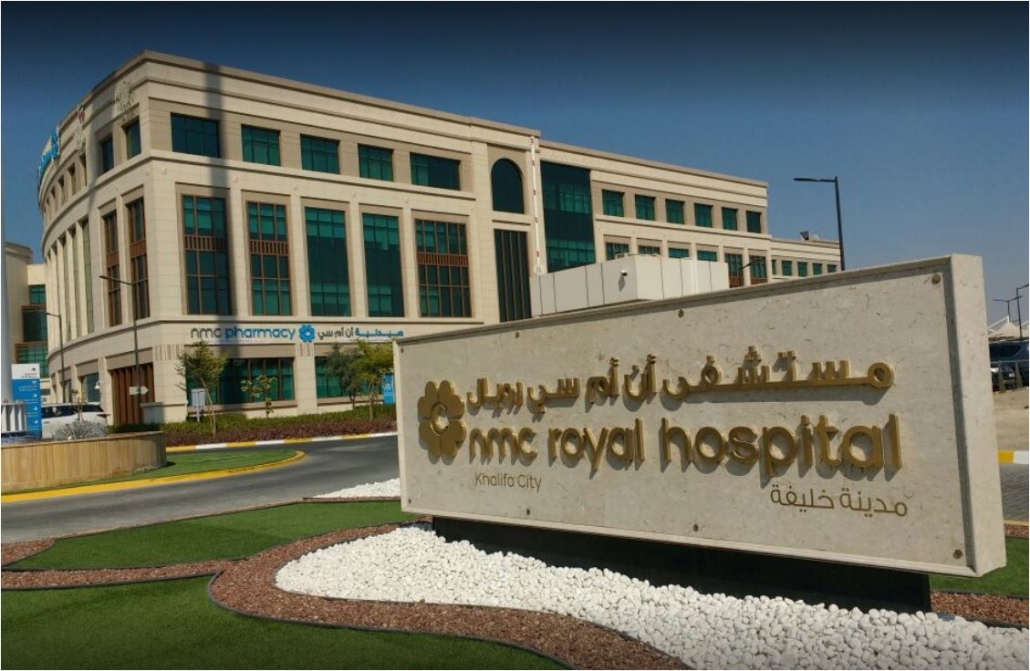
In Part 1, we traced the rise and collapse of NMC Health, a healthcare empire unravelled by hidden debt and opaque structures. We examined the allegations against EY: a failure to detect or confront critical risks, a reluctance to challenge local auditors, and a group audit strategy that,if it ever truly existed, had long lost its edge.
ISA (UK) 600: Special Considerations – Audits of Group Financial Statements recognises that in the age of decentralised corporate empires, the truth is scattered, and that the role of the group auditor is to piece it back together, suspiciously, patiently, and without assumption.
Let’s have a look at (some of) what went wrong!

IFRS 15 – Five steps
1. When revenue becomes a mirage
The lifeblood of any group is revenue. But in NMC’s case, there are lingering concerns about how revenue was recognised across subsidiaries, concerns sharpened by the fact that it operated in multiple jurisdictions, with varying local GAAPs and billing conventions. In a proper group audit, ISA 600 expects the group auditor to ensure consistency in how revenue is recognised across components, especially where timing and estimation are involved.
If one entity books income upon invoice, and another waits until cash receipt, consolidation becomes a fiction. That’s why IFRS 15 exists. But the problem isn’t just technical, it’s forensic. At NMC, some revenues appeared curiously smooth, unbothered by seasonal volatility or hospital admissions, hinting that numbers may have been guided more by expectations than operations.
“Revenue appeared overly smooth, inconsistent with the volatility one would expect in a multi-jurisdictional healthcare business.” CFA Institute
Had component auditors been pressed harder on their revenue recognition assumptions, and had the group auditor insisted on uniform policies in line with IFRS, this mirage might have dissolved earlier.
2. Capitalisation: when expense disguises itself
Another red flag lay in the treatment of capital expenditure. ISA 600 requires the group auditor to determine whether accounting policies are uniform across all components. But there’s little evidence that EY interrogated how different subsidiaries treated IT rollouts, leasehold improvements, or even clinical equipment.
Some may have expensed such costs, others capitalised them with optimistic useful lives. These differences directly impact profitability, and therefore, the valuation of goodwill, impairment triggers, and executive bonuses. Capitalisation can be deployed as a clever form of creative accounting, However, ISA 600 does not determine whether something can be capitalised or not, but whether it should be, and more crucially, whether the treatment is consistently applied across the group.
3. The hidden rift of local GAAP
One of the clearest breaches, and perhaps the most instructive, lies in NMC’s use of local GAAP for statutory reporting, without sufficient IFRS adjustments for group purposes. Now, this is not illegal. In fact, it’s quite normal, but what ISA 600, along with IFRS 10, insists on is that such divergence must be adjusted at the group level.
“The group auditor must ensure that local financials are translated, technically and philosophically, into the group’s chosen reporting language. This is not a clerical task. It is an act of translation, of harmonising fundamentally different views of reality.”
Yet NMC failed here.
The FCA’s Final Notice revealed that many components did not provide adequate reconciliations or adjustments. Some debts disappeared simply because no one brought them forward during the consolidation.
“NMC components were prepared under local GAAPs, with no evidence of adequate reconciliations or IFRS adjustments.” – FCA Final Notice
This is the kind of failure ISA 600 was designed to prevent. The group auditor is not meant to accept what is handed over. They are meant to ask: what might be missing, and why?
4. Goodwill
A brief word on goodwill. By 2018, it made up more than 37% of NMC’s total assets, a striking proportion for a company with earnings that were anything but steady. Now, ISA 600 doesn’t take aim at goodwill directly. It’s not in the standard’s crosshairs, but it does remind the group auditor to pay closer attention to components that can have a material impact on the consolidated accounts. And goodwill, especially when it grows disproportionately large, ought to invite more than a passing glance.
Goodwill is the result of acquisition accounting, which means any lapse in component-level valuations, control assessments, or impairment reviews will pollute the entire group picture.
“Goodwill stood at over 37% of assets, far above industry norms.” – CFA Institute.
Goodwill, in NMC’s case, wasn’t just an abstract accounting figure; it was the residue of overpayment, poorly justified and possibly engineered. If tangible assets were deliberately undervalued to inflate goodwill and skirt depreciation, then NMC not only overstated its profits but did so while racking up debt to fund assets that may never return their cost, the financial equivalent of buying a used car with a payday loan and calling it an investment.
The group auditor should have seen this as a warning light, but here, again, suspicion gave way to trust.
The standard that was there all along
What makes ISA (UK) 600 so quietly powerful is that it doesn’t offer dramatic proclamations. Instead, it asks something simple and deeply human of the auditor: Do not assume consistency. Do not rely on legacy. Verify everything.
If you want to trust compenent auditors, then you’d better be damn sure they’re not just ticking boxes. Are they independent? Do they know what they’re doing? And more to the point, is anyone actually pushing them to ask the difficult questions? Because if not, you’re not auditing a group, you’re just collecting signatures.
In the end, NMC didn’t just collapse under its own financial weight. It collapsed under a failure of professional judgment. And ISA 600, quietly, precisely, relentlessly, had been warning us all along!
Leave a Reply